Within just 48 hours, from 16:00 on October 10 to 16:00 on October 12, 2026, at the PETROCONS-MS Fabrication Yard, the company’s engineers and workforce successfully executed four consecutive complex heavy lifting operations for the C37-A and NMT-A wellhead platform topsides under the DSF-II Project. This intensive campaign not only propelled the project past a major technical milestone but also established a new company record for ultra-heavy equipment coordination density within a compressed timeframe, earning high praise from the Client, ONGC, and Main Contractor, MDL.
Full-Scale Fleet Coordination and the Art of "Threading" Structures Above 20 Meters
In the offshore fabrication sector, every single heavy structural lift is an intricate engineering challenge requiring weeks of preparation. From calculating the Center of Gravity (CoG), designing rigging configurations, and verifying Ground Bearing Pressure (GBP) to monitoring permissible wind speed windows, even a minor discrepancy during pre-lift checks can halt the entire operation for safety reassessment.
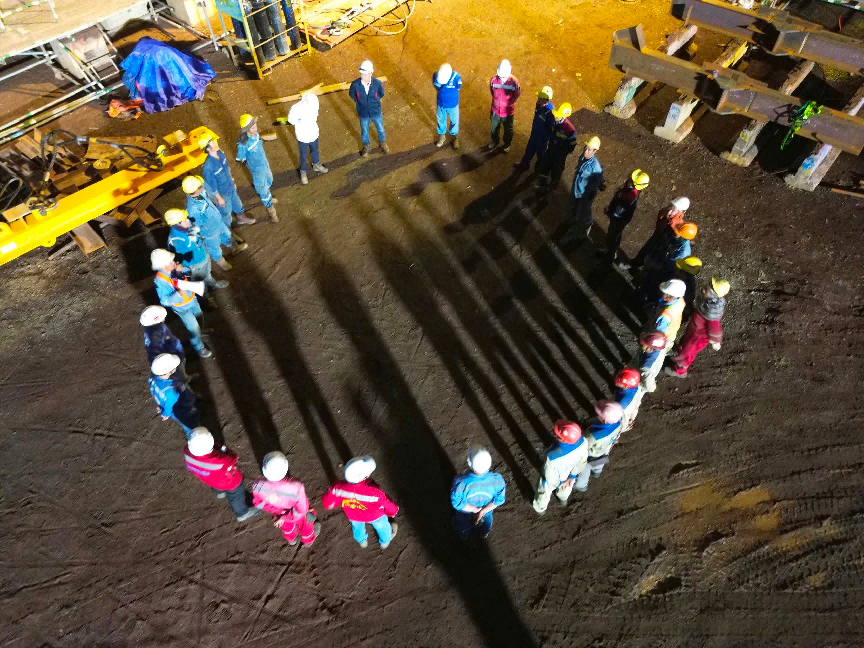
To solve the challenge of executing four major lifts across two separate platforms within a strict 48-hour window, PETROCONS-MS mobilized and assigned specialized roles to two primary crawler cranes: a 250-ton crawler crane dedicated to installing process skids, and an 800-ton super-heavy crawler crane tasked with hoisting major topside deck structures at high elevations.
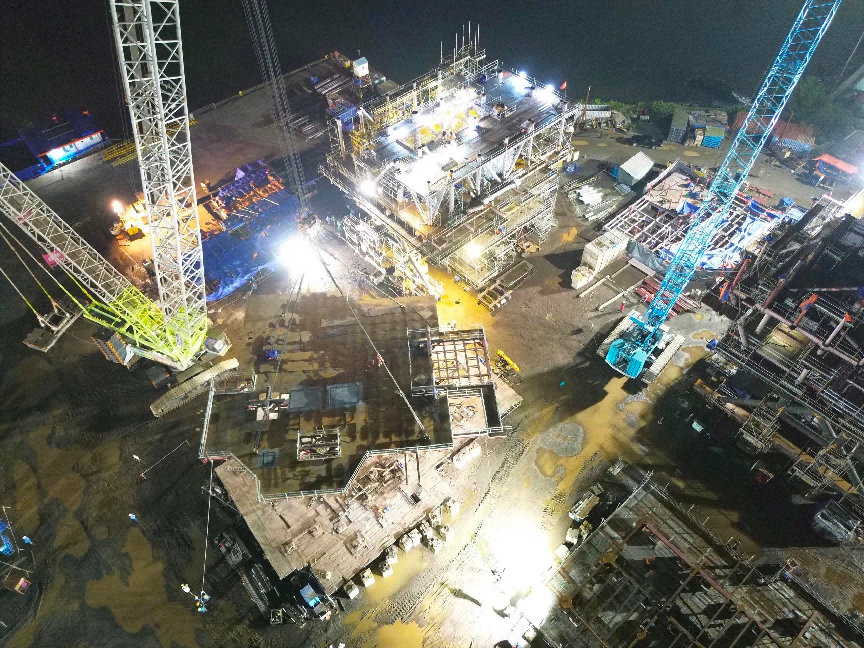
The campaign at the PETROCONS-MS Fabrication Yard officially commenced at 16:00 on October 10 with the opening lift on the C37-A platform: the 250-ton crawler crane successfully hoisted and installed a 35-ton separator skid onto the cellar deck. Immediately after this skid was secured, the entire site crew transitioned into a night shift to conquer the heaviest item of the campaign: the 142-ton Main Deck of the C37-A topside. Under the yard’s high-mast floodlights, the 800-ton crawler crane hoisted the 142-ton deck structure to an elevation of over 22 meters, maintained absolute mid-air stability, and mated it seamlessly onto the right place. This was achieved through flawless synchronization among crane operators, rigging banksmen, and Dimension QA/QC engineers monitoring tolerances down to the millimeter.
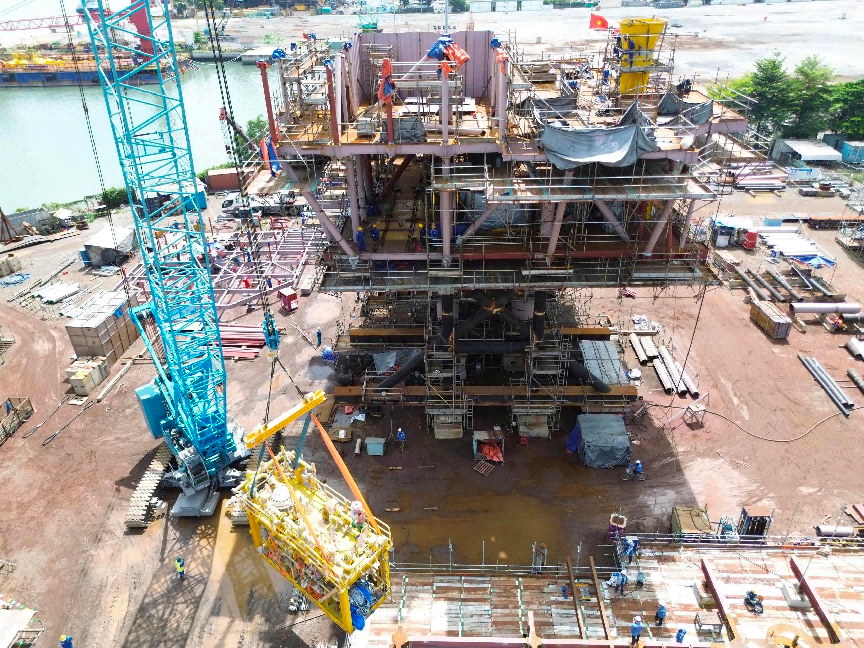
Without pausing to rest after a grueling night shift, on October 11, the 250-ton crawler crane and crew mobilized to the NMT-A platform construction area for the third lift: installing another 35-ton separator skid. The exceptional difficulty of installing these separator skids—particularly on the NMT-A platform where the Main Deck had already been stacked—was that the 35-ton unit had to be maneuvered into the cellar deck within a space strictly confined both overhead and laterally. Instead of a conventional vertical lowering, the engineering and rigging teams had to calculate precise sling angles and coordinate the 250-ton crane with winch cross-hauling to "thread" the skid through the narrow gap between the two deck levels with pinpoint accuracy, ensuring zero collision with surrounding structural frames and piping systems.
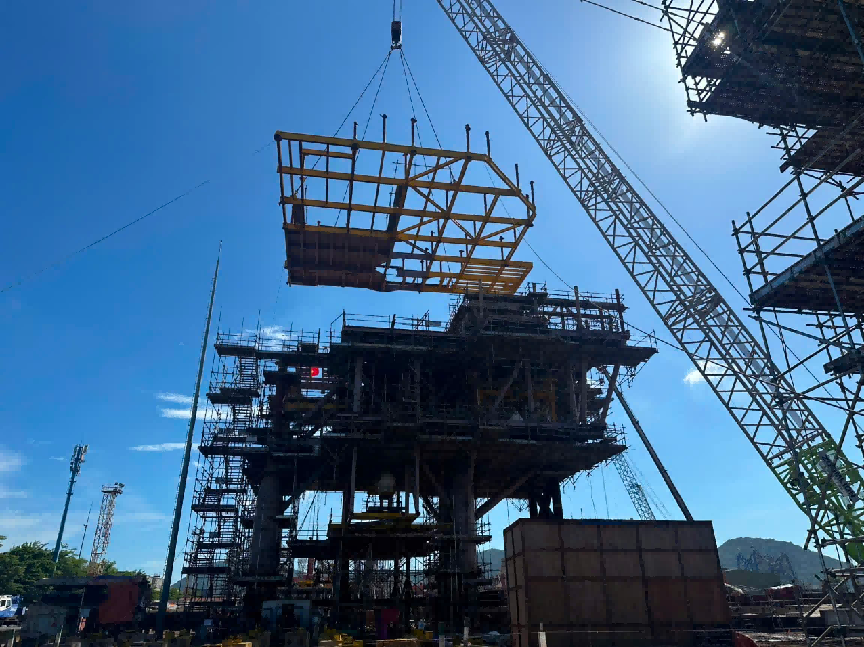
At exactly 16:00 on October 12, the 48-hour peak campaign concluded in triumph as the 800-ton crawler crane completed the fourth lift—hoisting the 31-ton Building Roof Deck of the NMT-A topside into position at an elevation exceeding 26 meters with absolute precision and safety.
Behind the 48-Hour Record: Seamless Synergy and Uncompromising Safety Discipline
Looking at the 48-hour blitz from October 10 to October 12, outsiders might only see the dramatic moments of 250-ton and 800-ton crawler cranes lifting hundreds of tons of steel into the air. However, for offshore fabrication professionals, that outcome was forged through months of relentless preparation and continuous overtime by a tightly integrated organization under the DSF-II Project Management Board (PMB). The Construction Team, QA/QC Team, and other specialized departments (Planning Team, Engineering Team., Procurement Team, Equipment Dispatch, etc.) worked in complete synchronization to build a solid operational backbone, resolving massive workloads without any workspace conflicts.
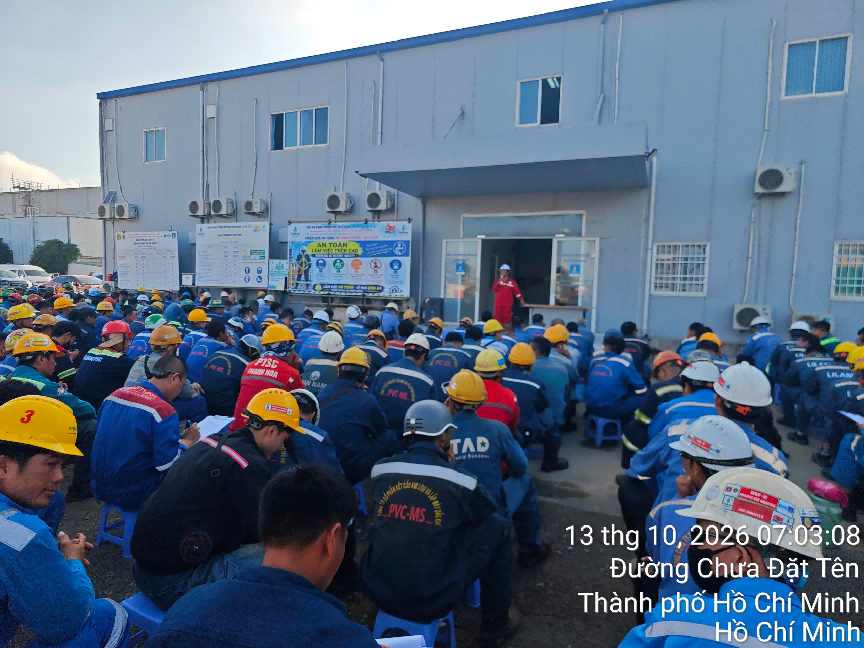
Especially noteworthy was the contribution of the HSE (Safety) Team, the vital safeguard of the entire campaign, which was accorded top priority throughout the 48 hours of non-stop execution. Facing immense operational risks from simultaneously operating two heavy crawler cranes (250-ton and 800-ton), working through the night, hoisting heavy structures at elevations of 22m to 26m, and maneuvering equipment into confined cellar deck spaces, HSE Team established a strict 24/7 on-site monitoring network. Every rigging plan, wind parameter, and safety exclusion zone was rigorously controlled, ensuring the entire campaign was completed with zero incidents for both personnel and equipment.
Earning Full Confidence from International Partners, Poised for November 2026 Jacket Sail-Away
The Discovered Small Fields II (DSF-II) Project off the west coast of India is invested by India's Oil and Natural Gas Corporation Limited (ONGC), featuring Main Contractor Mazagon Dock Shipbuilders Limited (MDL) and engineering management consultant Nauvata Energy Transition Enterprise. Within the overall project scope which encompasses new wellhead platforms, brownfield modifications, and subsea pipelines — PETROCONS-MS is entrusted with the complete onshore fabrication of four wellhead platforms (C37-A, NMT-A, D-33A, and SB-15A) at its fabrication yard prior to handover for offshore transportation, installation, and hook-up.
Actual project execution has proven DSF-II to be a demanding test of PETROCONS-MS’s management and construction capabilities, driven by stringent international technical standards and the schedule pressure of fabricating four platforms simultaneously. Therefore, successfully executing four consecutive, high-difficulty heavy lifts within exactly 48 hours made a powerful impression. Representatives from Client ONGC and Main Contractor MDL supervising directly on-site highly commended the construction management capability, heavy-lifting expertise, and professional work ethic of the DSF-II PMB and PETROCONS-MS workforce.
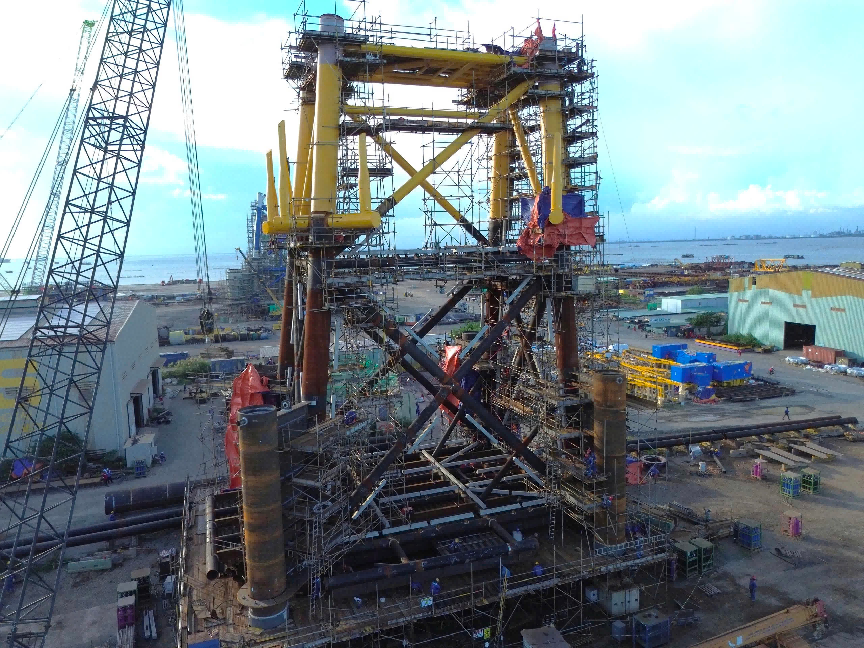
The newly established record on the C37-A and NMT-A topsides has created strong psychological and technical momentum for the project's final sprint. Currently, a high-paced working atmosphere is surging across the PETROCONS-MS Fabrication Yard, driving toward the next critical objective: completing, loading out, and achieving the simultaneous sail-away of two Jackets (C37-A and NMT-A) in November 2026.
PETROCONS-MS.